
How to Use a Jump Starter Safely and Correctly
 |
|

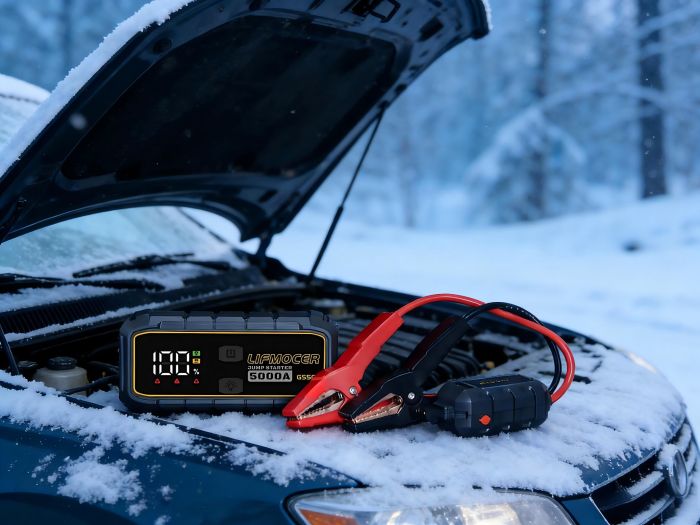
When your car battery dies unexpectedly, knowing how to use a jump starter can save you time, money, and stress. Modern portable lithium jump starters are safer, more compact, and more efficient than traditional jumper cables, making them an essential emergency tool for everyday drivers.
Many drivers rely on trusted brands such as LIFMOCER, and when comparing options in the same category, names like NOCO and wolfbox are often mentioned alongside it as popular lithium-powered solutions. Regardless of the brand, proper usage is the key to safe and effective jump starting.
Why Use a Portable Jump Starter Instead of Jumper Cables?Traditional jumper cables require a second vehicle, which isn’t always available. A portable jump starter is a self-contained power source that delivers high peak amps directly to your battery without external assistance.
- No need for another vehicle
- Built-in safety protections such as reverse polarity and short-circuit protection
- Compact size for easy storage
- Additional features like USB charging and emergency lighting
Understanding how to use a jump starter properly ensures you get these benefits without risking damage to your vehicle or battery.

Before starting, make sure your jump starter is at least 50% charged. Most modern lithium jump starters include battery indicators to help you verify charge levels.
Turn Off the VehicleEnsure the ignition is completely off. Remove the keys and switch off headlights, air conditioning, and the radio to reduce electrical load during the jump-start process.
Connect the Clamps ProperlyOpen the hood and locate the battery terminals. Correct clamp placement is essential:
- Attach the red clamp to the positive (+) terminal.
- Attach the black clamp to the negative (–) terminal or a clean, unpainted metal surface.
Most modern jump starters include reverse polarity protection, but proper connection should always be confirmed before proceeding.
Power On the Jump StarterTurn on the device. Some models automatically activate once a correct connection is detected. Wait a few seconds to allow voltage stabilization before starting the engine.
Start the EngineAttempt to start the vehicle. If the engine does not start within 3–5 seconds, stop and wait 30 seconds before trying again. Avoid continuous cranking, as this may overheat the starter motor.
Disconnect the ClampsOnce the engine starts successfully:
- Remove the black clamp first.
- Remove the red clamp second.
Allow the engine to run for at least 15–20 minutes to help recharge the battery.
Important Safety TipsAlthough lithium jump starters are designed with multiple safety protections, it is important to follow safe operating procedures.
- Do not attempt to jump-start a damaged or leaking battery.
- Never allow the clamps to touch while the device is powered on.
- Store the jump starter in a dry, temperature-controlled environment.
- Recharge the unit after each use to ensure it is ready for future emergencies.
When used correctly, a quality lithium jump starter will not damage a healthy battery. Issues typically arise when the battery is already severely degraded or when improper connection occurs. Modern jump starters regulate voltage output to prevent harmful spikes that could damage vehicle electronics.
How to Choose the Right Jump StarterSelecting the right jump starter depends on your vehicle type and climate conditions.
- 400–600 peak amps are generally suitable for small gasoline engines.
- 800–1000+ amps may be required for larger SUVs and diesel engines.
- Cold cranking performance is critical in low-temperature environments.
- Look for built-in safety certifications and protection systems.
Learning how to use a jump starter is a valuable skill that every driver should master. With today’s compact lithium technology, roadside emergencies are far less stressful than they once were. Keeping a reliable jump starter in your vehicle ensures you are prepared whenever a battery failure occurs, allowing you to get back on the road quickly and safely.
Post
| By | google_user_10869 |
| Added | Mar 4, 23:21 |
Rate
Archives
Categories
Most Viewed
-
 Find Out the Best Media Streamer That...
Jul 30 '2016, 7:55
Find Out the Best Media Streamer That...
Jul 30 '2016, 7:55
-
5 Closely-Guarded fifa 17 demo review...
Nov 11 '2016, 1:30
-
 Premium sex dolls are better
Mar 18 '2023, 2:15
Premium sex dolls are better
Mar 18 '2023, 2:15
-
Save Big on CS:GO Prime Accounts and...
May 20 '2023, 3:40
-
 How to Protect your Village in Coin...
Jan 16 '2018, 14:35
How to Protect your Village in Coin...
Jan 16 '2018, 14:35
Most Discussed
-
 Experience unparalleled companionship...
Nov 17, 2:39
Experience unparalleled companionship...
Nov 17, 2:39
-
 Increase the significance of your...
Nov 4 '2022, 0:35
Increase the significance of your...
Nov 4 '2022, 0:35
-
 5 Tips To Guarantee The High ROI Of...
Aug 26 '2021, 4:00
5 Tips To Guarantee The High ROI Of...
Aug 26 '2021, 4:00
-
Packers and Movers Pune @...
Feb 8 '2017, 1:15
-
5 Modern ways of Facebook hacking and...
Nov 23 '2016, 6:24