
How Central Banks Control Currency Exchange Rates
 |
|

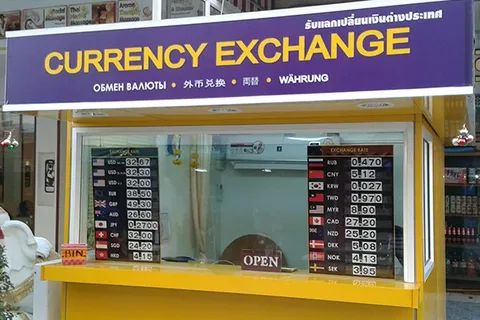
Okay so I was chatting with a friend who just got back from a trip to Europe and he was pretty frustrated. He'd exchanged money a week before flying out, then checked the rate the day he landed and it had already shifted against him. He lost maybe $80 just sitting on the cash. And his question was — who the hell decides these numbers anyway?
Fair question honestly. Most of us see currency exchange rateson a screen and assume it's just... the market doing its thing. But there are real institutions pulling levers behind that. The biggest ones? Central banks. And once you get how they work, a lot of things in the financial world start making more sense.
I want to walk through this in a way that doesn't put you to sleep. No economics textbook stuff, just real talk. Whether you trade forex, build financial tools, or you're just trying to understand why your dollar buys less than it did a year ago — stick with me.
Quick note — if you need live forex data, economic calendars, or real-time signals in one spot, vunelix.com is worth checking out. We'll circle back to that. First, the fundamentals.
So What Even Is a Central Bank?Think of a central bank as the financial backbone of a country. It's not where normal people go to open checking accounts. It's more like the bank that banks use. Every major economy has one — the U.S. has the Federal Reserve, Europe has the ECB, Japan has the Bank of Japan, UK has the Bank of England. You get the idea.
These places do a bunch of things — control inflation, keep the financial system stable, lend to banks when things get shaky. But one of their biggest effects, even if it's not always direct, is on currency exchange rates. Every decision they make sends ripples through forex markets, sometimes immediately.
And here's the thing people don't always get — central banks aren't some shadowy all-powerful club. They're mostly trying to hit very boring targets. Things like keeping inflation around 2%, keeping unemployment low, keeping the economy from overheating or crashing. The exchange rate stuff is often a side effect of all that, not the main goal.
Why Should You Actually Care About This?Let's make it personal. Say you're a freelancer getting paid in USD but you live somewhere the local currency is different. When the dollar strengthens, your purchasing power goes up. When it drops, you're effectively getting a pay cut — without anyone changing your contract.
For traders it's obvious. For developers building fintech apps, getting currency data wrong can tank your whole product. For researchers, the data tells a story about monetary policy that affects millions of people. So yeah — this stuff matters to a lot more than just Wall Street guys.
The Ways Central Banks Actually Move Currency RatesThere's not just one switch they flip. Central banks have a few different tools and they use different ones depending on what the situation calls for. Here's a rundown of the main ones:
Interest Rates — The One That Moves Markets the FastestThis is the big one. When a central bank bumps up interest rates, it basically makes the country more attractive to foreign investors — because now they can park money there and earn a better return. Demand for that currency goes up, value goes up. Pretty logical when you think about it.
Cut rates, and the opposite happens. Money starts looking for better returns elsewhere, the currency weakens. I remember watching the dollar in 2022 when the Fed started hiking aggressively to fight inflation. The dollar just kept climbing and climbing against basically everything. EUR/USD hit near parity. That hadn't happened in like 20 years.
What's interesting is markets often price this in before it actually happens. Traders aren't waiting for the official announcement — they're trading the rumor, the meeting minutes, the Fed chair's tone of voice practically. If you weren't tracking an economic calendar during all that, you were showing up late to every move.
When Central Banks Jump Into the Forex Market DirectlySometimes talking isn't enough. When a currency is moving way too fast — getting too weak or too strong — a central bank might actually go into the foreign exchange market itself and start buying or selling. It's called an intervention and it's a pretty serious signal.
Japan does this more than most. The Bank of Japan stepped in back in 2022 when the yen was getting crushed, bought yen with its dollar reserves to prop it up. The yen bounced back fast. Traders watching that market knew something was coming because the move was getting extreme. Having real-time rate data in a situation like that is the difference between catching the reversal and getting steamrolled by it.
Quantitative Easing — The "Print Money" OneEveryone heard about QE during COVID. Basically, the central bank creates digital money and uses it to buy government bonds and other assets. Why? To inject liquidity into the financial system, push down long-term interest rates, and keep things moving when the economy's stuck.
The downside — and it's a real one — is that flooding the system with money tends to weaken the currency. More dollars floating around means each one is worth a little less. You saw this play out in the U.S., Europe, Japan all doing it at once after 2008 and then again in 2020.
Quantitative tightening is pulling that liquidity back — selling those assets, shrinking the money supply. This can strengthen a currency. Both policies ripple through forex, commodities, crypto, pretty much everything.
Words Can Move Markets Too (Seriously)This one surprises people. A central bank doesn't even have to do anything — sometimes just saying something in the right way is enough to shift markets. This is "forward guidance." Jerome Powell says in a press conference that rates might need to stay higher for longer, and the dollar ticks up within minutes.
It sounds almost absurd but it makes sense when you think about it. Traders are always trying to figure out what's coming next. If the central bank tells them, they act on it. Which is why every major central bank press conference, speech, or meeting minute is on every serious trader's radar. Miss that event on your calendar, and you miss the move.
Fixed, Floating, and Everything In BetweenNot every country lets markets decide what their currency is worth. There are basically three setups you'll encounter:
• Fixed (Pegged): Government sets a specific value and defends it. Saudi Arabia pegs the riyal to the dollar, for example. The central bank constantly buys and sells to maintain the peg. Works fine until you run low on reserves.
• Floating: Rate is determined by market supply and demand. Most major currencies work this way — USD, EUR, GBP, JPY. Central banks still have influence but aren't fixing a specific number.
• Managed Float (sometimes called a dirty float): Floats freely most of the time but the central bank steps in occasionally when things get too volatile. China's yuan works this way. India's rupee too, more or less.
Knowing which system a country operates on changes how you read their currency movements. A big swing in a free-floating currency is normal. A big swing in a pegged one means something has probably gone wrong.
The Inflation Connection — This One's UnderratedInflation and exchange rates are two sides of the same coin in a lot of ways. When inflation runs hot in a country, the real purchasing power of that currency is eroding. Investors notice. Capital starts leaving. The currency weakens.
Turkey is probably the most dramatic recent example. Their inflation got into triple digits at one point. The lira went from trading around 8 to the dollar to over 30 to the dollar in a few years. That's not just a market quirk — that's inflation destroying currency value in real time.
On the flip side, countries that keep inflation under control — Switzerland, Singapore, Japan for a long time — tend to have currencies that hold their value. This is why CPI reports, PPI data, and inflation indicators are such big deals for traders. They're previews of what central banks are likely to do next.
Tools like vunelix.com pull together economic indicator data alongside live rates, so you can watch how inflation numbers actually translate to currency movement in practice. That kind of paired view is genuinely useful.
What This Looks Like for Developers and Fintech TeamsLet's get practical. Understanding the macro stuff is great, but if you're a developer building something that handles currency data, you need infrastructure that keeps up with how fast markets move.
After a central bank decision, rates can reprice significantly within seconds. If your app is pulling data every 60 seconds or working off a delayed feed, you're showing users numbers that are already wrong. That's a trust problem, and in fintech trust is everything.
Vunelix.com was built with this in mind. You get a RESTful API and WebSocket streaming for genuine real-time rates across 180+ currencies and 2,000+ forex pairs. Works with Python, PHP, Java, Android, CURL — whatever your stack looks like. Historical data goes back 30+ years, which matters a lot if you're doing any kind of backtesting or modeling.
What to Look For in a Forex Data ProviderNot all data sources are the same. Here's what actually matters:
1.Low latency — the data needs to arrive fast, especially around major events
2.Source quality — where the rates come from (banks, exchanges, aggregators?)
3.Deep historical access — you'll want this for analysis and backtesting
4.Broad pair coverage — if you only get the majors, you're limited
5. Developer-friendly integration — good docs, multiple language support, clean API
Vunelix checks these boxes. And beyond forex, they also cover 6,000+ crypto pairs and 50,000+ stocks across 30 countries — so if your app expands into those assets, the infrastructure is already there.
The Swiss Franc Moment — A Cautionary Tale for TradersI want to give you a real example of what happens when you're not paying attention to central bank news. January 2015. The Swiss National Bank had been pegging the franc to the euro for years. Traders largely assumed the peg was safe. Then one morning, no warning, the SNB announced they were removing it.
The franc jumped 30% against the euro in minutes. Not hours. Minutes. Brokers blew up. Traders with positions on the wrong side got destroyed. Several retail forex brokers went insolvent because clients couldn't cover their losses fast enough.
The people who came out okay? They either weren't in the trade, or they were small enough that the damage was manageable, or — and this is the key part — they were watching. They had alerts set up. They understood the SNB had been under pressure to remove the peg. They knew the risk existed.
That's not just a story about risk management. It's a story about information. Having a feed that tracks central bank activity, currency pair movements, and economic event calendars gives you a chance to see things coming — or at least not be completely blindsided.
For Researchers and Educators — The Data Side of Monetary PolicyNot everyone reading this is a trader. Some of you are economists, academics, or people building curriculum around financial markets. And honestly, the data access side of this topic is underappreciated in research contexts.
If you're studying how central bank policy affects exchange rates — or how rate changes in one country spill over into trading partners — you need historical data that goes back far enough to actually draw conclusions. You also need clean, reliable data, not something you've patched together from three different sources with different methodologies.
30 years of historical forex data with solid API access changes what you can build. Instead of spending your time collecting and cleaning data, you can actually focus on the analysis. That's a meaningful shift in how research gets done.
Wrap-Up: Central Banks Are the Hidden Force in ForexWe covered a lot here. The short version: central banks shape currency exchange rates through interest rate policy, direct market interventions, quantitative easing, and even just through what their officials say publicly. Every one of these tools sends signals that traders, investors, and algorithms react to — sometimes instantly.
If you're trading, you need to build central bank calendars into your workflow. If you're developing, you need data infrastructure that can keep up with how fast rates move after major decisions. If you're doing research, historical data paired with economic indicators gives you the full picture.
The underlying theme is the same for all of these: information matters. The people who understand what central banks are doing and why — and who have the right tools to track it — are just better positioned than those who don't.
If you want a platform that brings all of this together — live rates, historical data, forex signals, economic calendars, indicators — vunelix is built for exactly that kind of work. Worth a look.
FAQs: Q1. What's the main thing central banks do to affect currency exchange rates?Interest rate decisions are the biggest lever. Raise rates and the currency typically gets stronger — foreign investors want in on those returns. Cut rates and capital tends to flow out, weakening the currency. But that's not the only tool. Direct market interventions, asset purchase programs, and even verbal guidance from officials all feed into how the market prices a currency.
Q2. Can a central bank keep its currency pegged forever?In theory yes, if they have unlimited reserves. In practice, no. Pegs work until they don't. The UK tried to maintain its position in the European Exchange Rate Mechanism in 1992 and George Soros effectively broke the peg by shorting the pound hard enough that the Bank of England couldn't defend it. Saudi Arabia's dollar peg has held for decades, but that's partly because of oil revenues funding massive reserves. It's always a bit fragile.
Q3. How does this actually affect me as a forex trader day to day?Central bank meeting dates are probably the most important events on your calendar. Rate decisions, press conferences, even minutes from previous meetings — all of these move markets. The trick is knowing what's already priced in versus what's a surprise. A rate hike everyone expected might do nothing. A rate hike when the market thought they'd hold steady can send a currency flying.
Q4. What is quantitative easing and why does it weaken a currency?QE is when a central bank digitally creates money and uses it to buy financial assets — usually government bonds. More money in the system tends to dilute the currency's value, so it weakens. QT (tightening) runs this in reverse — the central bank shrinks its balance sheet, which pulls liquidity out and can strengthen the currency. Both have shown up in big ways over the past decade.
Q5. How do developers pull live currency exchange rate data into their apps?A forex data API is the standard approach. You make HTTP requests and get back structured rate data in JSON. For live streaming without constant polling, WebSocket connections are better. Vunelix.com supports both, covering 180+ currencies and 2,000+ forex pairs, with compatibility across Python, PHP, Java, CURL, and Android.
Q6. Fixed rate vs. floating rate — what's the real difference?A fixed rate is set by the government and defended by the central bank. It doesn't change with market forces (unless the peg breaks). A floating rate moves based on supply and demand — which is what most major world currencies do. Most serious economies use floating systems because they automatically adjust to economic conditions, though central banks still nudge things when necessary.
Q7. Why do exchange rates move even when no central bank announcement is scheduled?Markets are always trying to predict the future. Economic data releases — jobs numbers, inflation reports, trade figures — all shift expectations about what the central bank will do next. So even without a formal announcement, if a jobs report comes in way stronger than expected, traders start pricing in a higher chance of a rate hike and the currency reacts. It's all about expectations, really.
About Vunelix.com
Vunelix.comis a financial data and analysis platform covering global markets. It provides live and historical currency exchange rates, forex signals, economic calendars, financial news, and market indicators. Coverage includes 2,000+ forex pairs, 6,000+ crypto pairs, and 50,000+ stocks from 30 countries. Data is sourced from financial institutions and central banks worldwide, delivered via RESTful API, JSON API, and WebSocket.
Post
| By | google_user_10798 |
| Added | Feb 17, 9:00 |
Tags
Rate
Archives
Categories
Most Viewed
-
 Find Out the Best Media Streamer That...
Jul 30 '2016, 7:55
Find Out the Best Media Streamer That...
Jul 30 '2016, 7:55
-
5 Closely-Guarded fifa 17 demo review...
Nov 11 '2016, 1:30
-
 Premium sex dolls are better
Mar 18 '2023, 2:15
Premium sex dolls are better
Mar 18 '2023, 2:15
-
Save Big on CS:GO Prime Accounts and...
May 20 '2023, 3:40
-
 How to Protect your Village in Coin...
Jan 16 '2018, 14:35
How to Protect your Village in Coin...
Jan 16 '2018, 14:35
Most Discussed
-
 Experience unparalleled companionship...
Nov 17, 2:39
Experience unparalleled companionship...
Nov 17, 2:39
-
 Increase the significance of your...
Nov 4 '2022, 0:35
Increase the significance of your...
Nov 4 '2022, 0:35
-
 5 Tips To Guarantee The High ROI Of...
Aug 26 '2021, 4:00
5 Tips To Guarantee The High ROI Of...
Aug 26 '2021, 4:00
-
Packers and Movers Pune @...
Feb 8 '2017, 1:15
-
5 Modern ways of Facebook hacking and...
Nov 23 '2016, 6:24